



By Sostenus Wilherm
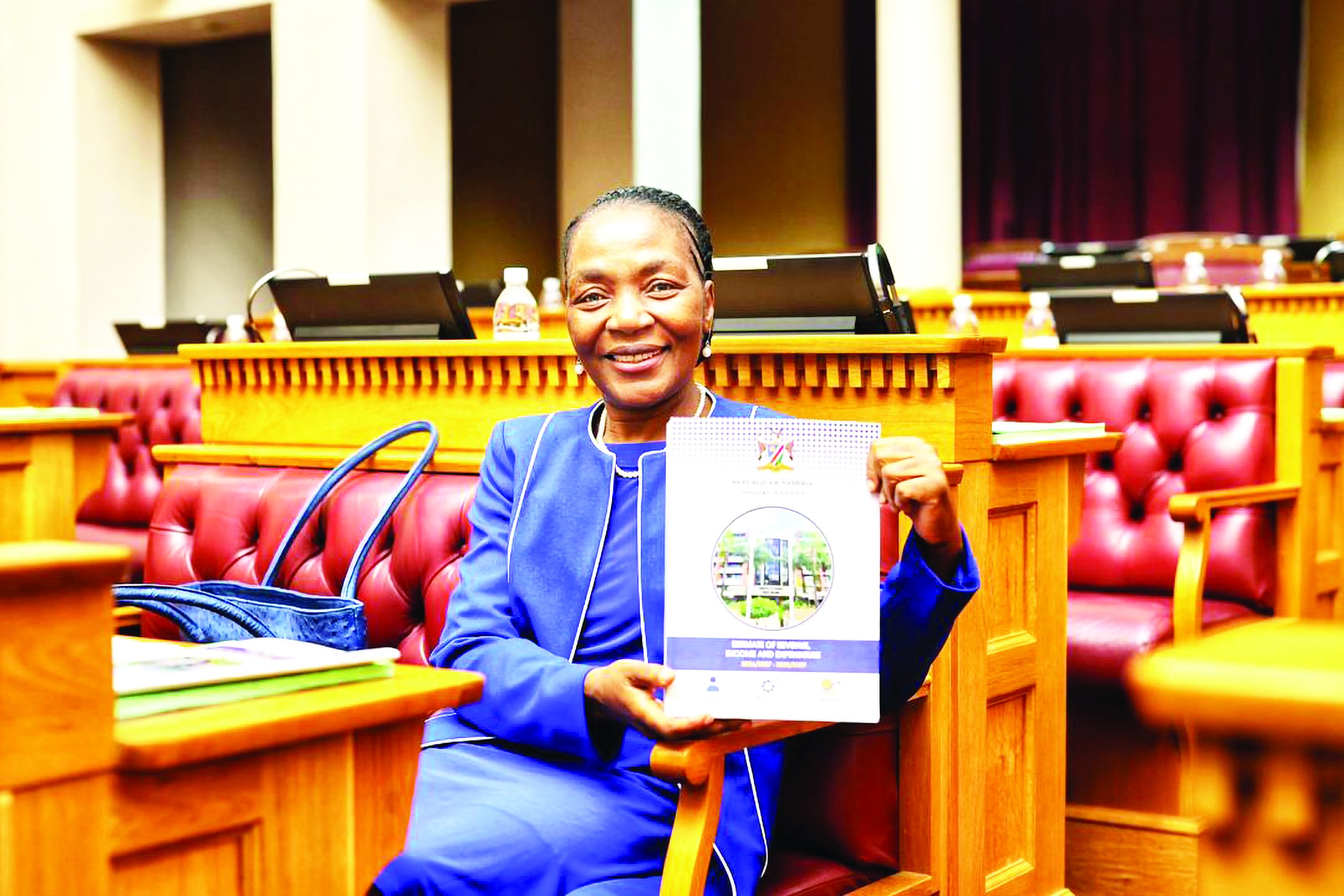
The N$89.8 billion revenue budget for 2026/27 financial year tabled by finance minister Erica Shafudah recently is set to protect spending on education, health and social grants.
Shafudah said the budget strikes a careful balance between government discipline and national development.
“We are committed to restoring fiscal stability while continuing to invest in our people and productive sectors of the economy. This budget sets Namibia on a firm path toward fiscal sustainability while supporting growth and protecting the most
vulnerable,” Shafudah said.
She added that the revenue for 2026/27 is estimated at N$89.8 billion, a 2.5 percent increase from the revised N$87.4 billion recorded in 2025/26 and a major boost will come from Southern African Customs Union (SACU) projected at N$24.3 billion compared to N$21.8 billion last year.
However, revenue from some mining activities is projected to decline due to a temporary drop in gold production while domestic taxes are expected to rise slightly in line with economic growth.
Shafudah indicated that the operational budget is set at N$81.3 billion, which is N$746 million higher than last year before announcing that government managed to save N$2.3 billion.
She savings were derived from reviewing major cost drivers and cutting wasteful as well as inefficient spending across offices, ministries and agencies.
“We have taken firm steps to eliminate wasteful expenditure and redirect resources to priority areas,” she added. Shafudah said.
According to her, about N$5.9 billion of the operational budget is directed to key priorities, including N$2.8 billion to subsidise tertiary education and N$1.7 billion to improve the salary structure of civil servants.
For 2026/27 fiscal period, staff members in Grades 15 and 14 will receive a monthly increase of N$700, while employees in Grades 13 to 1 will receive a five percent increase in their basic salaries as from 1 April 2026. In 2027/28, all government employees who fall under Grades 15 to 1 will receive another five percent increase.
Non management employees will also receive a seven percent increase in their transport allowance as from April 2027.
Furthermore, government has set aside N$78 million to address the shortages of judges and magistrates and the recruitment of health professionals is budgeted at N$259 million, while N$108 million is allocated for recruitment of cadets in the National Correctional Service.
A further N$58 million is set aside to improve pay and benefits of Public Office Bearers.
Shafudah also announced that the development budget for 2026/27 is set at N$6.5 billion for state-funded projects and an additional N$4 billion is expected from grants and loans to support infrastructure development across ministries.
The tabled budget further reveal that development spending is projected to increase to N$7 billion in
2027/28 and N$7.7 billion in 2028/29.
To manage lower development ceilings, some large projects such as housing, roads and water infrastructure will be funded through state owned enterprises and other non budget sources.
The social sector which covers education, health, social safety nets and youth empowerment, remains the biggest area of spending and it receives N$54.3 billion, which accounts for 61.7 percent of total expenditure excluding interest payments.
“Our social grants and safety nets are essential to protect vulnerable households during difficult economic times.”
She further said funding has been secured to maintain old age pensions and other grants for vulnerable groups.
The safety and security sector will receive N$17 billion, making it the second largest allocation, representing 19.5 percent of total spending excluding interest payments.
Shafudah noted that the funding is aimed at maintaining law and order and strengthening national stability.
In the economic and infrastructure sector, transport will receive N$2.1 billion from the state revenue fund and the sector will benefit from external loans and grants amounting to N$1.6 billion, as well as fuel levies dedicated to road construction.
Agriculture and land reform is allocated N$1.8 billion, including N$478 million for development projects and water and marine resources receives N$1 billion, with additional external funding to improve rural water supply and water security.
Industries, mines and energy is allocated N$826.7 million, including N$320 million for rural electrification.
Excise duties on alcohol and tobacco products increased from 25 February in line with the SACU agreement as tobacco duties rose by 3.39 cents, while duties on alcoholic beverages increased by 3.39 percent.
Government projects that the overall budget deficit will decline to 5.5 percent of GDP in 2026/27. The deficit is expected to narrow further to 3.8 percent in 2027/28 and 3.3 percent in 2028/29.