



By Patience Makwele
Political analysts have stressed the importance of evidentiary discipline in democratic oversight following sweeping allegations by Independent Patriots for Change leader Panduleni Itula, who accused President Netumbo Nandi-Ndaitwah’s family of operating what he described as an “integrated capture system” across Namibia’s petroleum value chain.
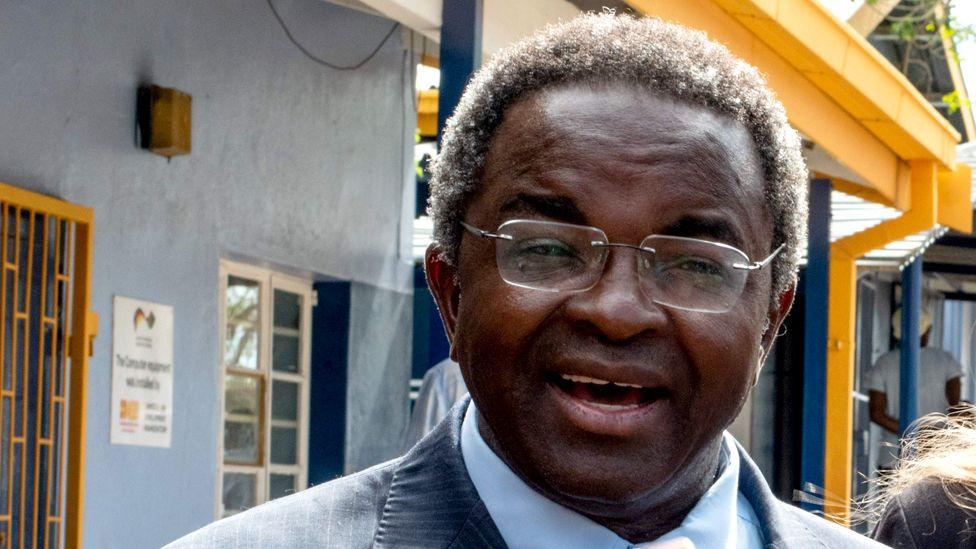
Political analyst, Ndumba Kamwanyah said opposition leaders carry a serious ethical obligation when raising allegations of this magnitude.
“An opposition leader, such as the president of the Independent Patriots for Change, has a serious ethical duty when making public allegations,” Kamwanyah said.
“In a democracy, holding the government accountable is essential. But accountability must be grounded in evidence,” he added.
Kamwanyah cautioned that serious claims without proof risks weakening public trust in the opposition parties and their institutional credibility.
“If an opposition leader makes strong claims without presenting proof, it can weakens public trust, damage institutions and reduce the credibility of the office they hold. The responsibility is not only political, but moral. Kamwanyah”
Kamwanyah added: “If evidence exists, it should be presented through proper legal or parliamentary channels. If it does not, allegations should not be framed as fact.”
At the same time, he acknowledged that public scrutiny of those in power remains legitimate.
“If the President’s sons are involved in business or political networks, especially where public interest or state resources may be concerned, that deserves careful and lawful examination.”
“Their mother as President and therefore the first citizen, places the immediate family within a sphere of legitimate public scrutiny. However, such scrutiny must also be evidence-based and fair.” Kamwanyah reiterated that democratic accountability must be exercised responsibly.
“Opposition leaders must conduct themselves with discipline and integrity. The media and civil society should demand proof, verify facts independently, and avoid amplifying untested claims,” he said.
“Transparency, credibility and responsible communication are essential to protect democratic accountability and public confidence.”
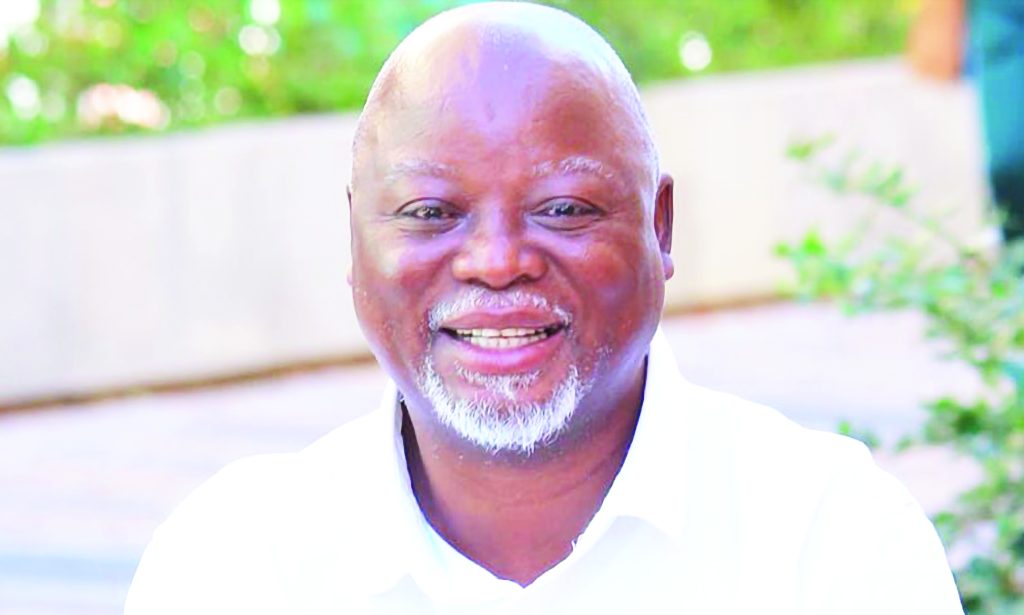
Also commenting on the matter, political analyst Sakaria Johannes said opposition leaders have a duty to ensure that public allegations are supported by evidence before being released. He cited that opposition parties play a critical role in democratic oversight by providing checks and balances to the government.
“From an accountability perspective, that is the main role of an opposition leader. To provide checks and balances on the ruling party,” Johannes said.
He cautioned that publishing unverified accusations could mislead the public.
“When a leader speaks, it is not only to a small group but to thousands of people listening. Information that is not true may mislead the nation.”
Johannes said political communication must be based on empirical evidence to avoid reputational harm and potential legal disputes.
“If someone makes accusations without evidence, it can become a court matter. If you cannot provide proof, it is better not to publish until the evidence is obtained.”
He advised opposition leaders to avoid making allegations based on speculation or “mere opinions”.
Another analysts Phanuel Kaapama echoed the sentiments these sentiments by saying: “One would have hoped that for him to prove these alleagations. Maybe,if given the benefit of the doubt he might do so. However, there have cases in the past were allegations were made for the puprose of politicking and were never proven.”
PRESIDENCY DEMANDS PROOF
Meanwhile, since Itula’s public claim the Presidency has rejected the allegations and challenged him to provide verifiable evidence.
In a response issued through Presidential press secretary Jonas Mbambo, State House stated:
“The Presidency states unequivocally that the President and her children hold no ownership, beneficial interests, or stake in the oil and gas industry.”
Mbambo further called on the IPC leader to provide credible evidence supported by a clear documentary paper trail to substantiate the claims advanced.
The Presidency reiterated its commitment to transparency and responsible public discourse, noting the seriousness of the allegations.
The matter arises at a time when Namibia’s oil and gas discoveries have placed the country under heightened global attention .
SONS BREAK SILENCE
In a separate explanatory statement dated 24 February, the President’s sons, Tate Nande and Ndeli Ndaitwah, strongly rejected the allegations, describing them as false and defamatory.
“While our initial intention was definitely not to engage with Panduleni’s falsehoods, the nature of what he was saying ultimately made a response necessary for our own safety, integrity and dignity,” the statement read.
Addressing claims that Tradeport, a company linked to them, sells diesel at the Lüderitz oil port, the brothers described the allegation as a “blatant lie.”
“Tradeport purchases its diesel from Vivo Energy. The product is delivered to our depot for our own operational consumption. This fuel is used exclusively to refuel our own fleet of trucks that transport cargo on behalf of our clients,” they stated.
They explained that the arrangement, operational since 2019, is intended to manage logistics cash flow and does not constitute fuel distribution within the port.
On allegations that Tradeport secured its position at Lüderitz without competitive tender, the brothers said the company approached Namport with a viable business proposition and that allocation followed internal procedures applicable to other operators.
“Being referred to as an anchor customer is a compliment. It signifies the vital role Tradeport plays in the port’s ecosystem,” the statement read.
They further rejected claims that the company is involved in improper oil sector activities, stating that port handling, storage and logistics coordination are standard services provided by operators.
Turning to Vaneli Foods, a farming enterprise founded in 2018 by Ndeli and his wife, the brothers clarified that the business is agricultural in nature and unrelated to the petroleum industry.
“We have no interest in oil, nor will we ever have such interest. Vaneli is a farming business,” they said, adding that the company at its peak employed approximately 20 people before suspending operations due to crop losses linked to adverse weather conditions.
They warned that the allegations pose safety risks and strongly rejected what they termed a malicious campaign of vilification.