




By Feni Hiveluah
Thirty-six years after political freedom, opposition leaders have expressed divergent views on how Namibia’s resources must reshae th3 country’s map towards economic power.
The 2025 Petroleum Amendment Bill seeks to officially move power of authority from the Ministry of Industries, Mines and Energy directly into the Office of the President.
Critics, however, fear a dangerous centralisation of the nation’s hydrocarbon frontier.
The amended Bill shifts decision making powers to the Office of the President via the newly established Upstream Petroleum Unit (UPU).
National Democratic Party leader Martin Lukato stated that he does not believe that the current draft of the amendment bill provides enough transparency clauses regarding who owns the local companies receiving sub-contracts.
“It includes some transparency measures, but beneficial ownership transparency for companies is still weak or indirect,” Lukato said.
He highlighted conflict of interest as one of his main concerns and stated that officials regulating the sector cannot hold interest in petroleum licence holding companies and must declare their assets as well as business interests to the president.
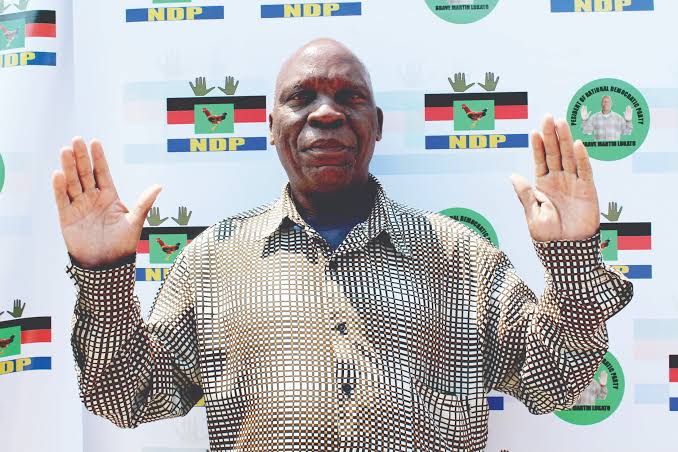
Lukato stated that the amendment bill strengthens administrative transparency and oversight, but does not clearly guarantee transparency about the real owners of local oil companies.
He added that that gap is one of the main criticisms from civil society and some members of parliament. Lukato advocates for 50 percent local mineral processing which calls for at least half the country’s minerals to be processed domestically before exportation.
“Raw materials have a lower value than processed goods and processing locally can multiply export value through refining, smelting, or manufacturing,” he added.
Namibia Economic Freedom Fighters (NEFF) vice president Kalimbo Iipumbu stated that the party has consistently rejected the current carried-interest model, where the state holds between 10 percent and 25 percent in all major mining and oil projects and added that the state should hold at least 50 percent.
“We advocate for a minimum of 50 percent state ownership in all strategic natural resource projects, including oil, gas and mining. The Petroleum (Exploration and Production) Amendment Bill provides a critical opportunity to establish this principle as a national standard,” Iipumbu explained.
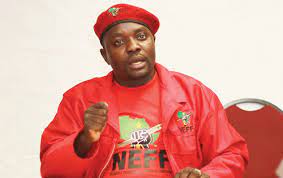
According to him, the discovery of oil and continued exploitation of mineral resources must transform ownership patterns in favor of the Namibian people.
He added that Namibia stands at a defining moment in its economic history and highlighted that 10-25 percent levels of participation do not amount to economic sovereignty.
The Epangelo Mining Company, for example, has less than 50 percent shares in mines such as Husab Uranium Mine (10 percent), Navachab Gold Mine (7.5 percent), and others, and according to Kalimbo, this highlights the need to secure equity through law as a resource entitlement and not through purchasing shares.
“For 36 years, our energy sector has benefited foreign interests more than the Namibian people, and we will not allow the same mistake to be repeated with oil and gas. By 2030, Namibia must not just be producing oil, it must own it, control it, and use it to uplift its people, not enrich multinationals,” he noted.
Landless People’s Movement spokesperson Lifalaza Simataa said that while the intent behind establishing a monitoring unit like the UPU is sound, the proposed implementation is flawed due to a lack of clear communication and accountability structures.
Simataa argued that the president’s objective risks duplicating the ministry of mines’ functions, while the unit itself lacks the capacity to make independent decisions.
“More so in the instance of accountability, where we find a problem, is that when it is under the Office of the President, there isn’t an accountability measure that is aligned with Parliament,” Simataa stated.
Instead of creating an entirely new governing body, the LPM suggests the president should consult with existing overseers to streamline and execute processes more effectively.
He warned that this new structure removes the president from direct parliamentary questioning, potentially forcing all disputes into court.
“That becomes a bit problematic that all the issues that may occur now need to be solved by the judiciary, where it will have to be then extended into court cases that may prolong things.”
The Upstream Petroleum Unit (UPU) in the Office of the President highlighted that the 2025 Amendment Bill should be understood in the context of the growing strategic importance of Namibia’s emerging petroleum sector.
The unit said that as the country moves closer to the possibility of production, decisions in this sector increasingly intersect with broader national priorities such as economic planning, infrastructure readiness, local participation and fiscal policy.
The intention of moving licensing and royalty powers is therefore to strengthen coordination at the highest level of government while continuing to rely on technical expertise and professional assessment in the administration of the sector.
“The location of the unit within the presidency is intended to enhance coordination and strategic oversight rather than replace technical evaluation,” the unit stated.
“Technical assessments will continue to be informed by professional expertise and due diligence processes to ensure stability, credibility and predictability for the sector.”
The unit maintains that all regulatory decisions will continue to be exercised within the framework of the law, petroleum agreements and established administrative procedures.
The Unit stated that the expertise and institutional memory built within the Petroleum Directorate over the years remain an important national asset.
“As Namibia moves closer to the next phase of sector development, maintaining technical capacity will be essential.”
The UPU indicated that it understands that with any emerging industry there can be a degree of uncertainty and even fear of the unknown. However, it maintains, it is equally important that the country approaches these developments with a sense of optimism and confidence in our institutions, while ensuring that the sector is managed responsibly and in the best interest of the Namibian people.