


… NAINDA SAID IN 2013
By Sostenus Wilherm
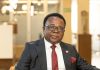
At just 18 years old, Anne- Marie Nainda walked into the Namibian Police Force as a young recruit with little more than determination and ambition. More than three decades later, she now stands as the first female at the highest level of policing in the country after being appointed acting inspector general of the Namibian Police Force.
She started with patrolling the streets of Katutura and Windhoek to leading complex investigations, regional crime operations and national police administration.
Nainda joined the police force in 1992 and started her career at Katutura and Windhoek police stations before steadily rising through operational and investigative ranks. She was the first-ever female regional commander.
She later served as an Interpol desk officer in Windhoek, where she handled cases involving drug trafficking, fraud and vehicle theft. Her experience also includes serving as a regional specialised officer in Harare, focusing on violent crime and fugitives.
Nainda was later appointed Oshikoto regional commander before moving into senior administrative and investigative leadership positions within the police force.
In 2022, she was promoted to major general and became Namibia’s first female deputy inspector general, overseeing administration within the force.
She holds a master’s degree in international relations and diplomacy management, an LLB from the University of South Africa, a postgraduate qualification in public sector management from the Namibia Institute of Public Administration and Management, and a national higher certificate in police science.
EXTRACT FROM NAINDA’S 2013 INTERVIEW WITH CONFIDENTE:
First female regional commander tells Marianne Nghidengwa she is always been a trailblazer
Out of 13 Namibian Police Force regional commanders, Commissioner Anne-Marie Nainda is the first female to be appointed to such a position. Commissioner Nainda is the Regional Commander of the Oshikoto Region. Confidente caught up with the Commissioner, who is also a specialised Interpol Officer, to discuss her role as the most senior female police officer at regional level, impacts of stereotypes on women in the work place and her love for quality family time.
Tell us a little bit about yourself?
I am the eldest of three children and I was born and bred in Keetmanshoop, Karas Region. My mom is late, but my father is still alive and lives in Keetmanshoop.
Would you say your upbringing plays a role in who you are today, if so, how?
Definitely, I stayed most of the time with my uncle and he taught me to be a responsible and exemplary person in all I do. He was strict but gentle and always amplified the fact that I was a unique and brilliant child. He believed in me and whenever he reprimanded me he would explain why he did it.
When did you join the police force?
In Keetmanshoop, immediately after Grade 12, in 1992.
What area of policing did you specialise in?
I am an Interpol Specialized Officer. I am also a qualified detective with special training in drugs, human trafficking and violent and intrusive crimes. My other speciality is in training design, material development and facilitation.
You are the first female regional commander, how does that make you feel?
I have always been a trendsetter and I feel blessed.
How is it like to be the most senior female officer in a male dominated field?
I am only the most senior female officer at regional level, but national level we are three female officers. Among my fellow-regional commanders I do not feel intimidated because we are equally exposed and I am well conversant with my duties.
Do your male counterparts respect you the same way they respect male officers?
With the necessary respect, because it is the rank that matters and not gender.
How did you climb that ladder considering you are the only female regional commander?
Through hard work and dedication. I am a person who likes to take risks and usually goes an extra mile if I am given a chance.
Do you think other female officers are capable of securing such a position as yours?
Yes of course, if I can do it, so can they, if they are given the opportunity. We have a number of female officers who are growing professionally and showing potential.
What do you wish to achieve?
I would like to study for a Masters degree and explore other internal opportunities to grow in my leadership role.
What has been the most memorable moment in your career?
During the 2010/2011 financial year we (Oshikoto) managed to reduce the overall crime rate by 22 percent and that has given me a greater sense of achievement.
Who has been your role model and why?
I have always been inspired by a number of persons, even within the Police Force, but the three female governors are topping my list. From each one of them there is a specific attribute (assertiveness, boldness and excellence) that speaks to my inner-person as a woman leader. They are extraordinary women.
What advice do you have for young girls and women who want to join the police force?
As women we should start to see the best in ourselves and build resilience towards negative things that happen to us and around us. When we get opportunities we should embrace it and leave sound legacies.
Just what do you do for fun after a long day at work?
I am an avid reader and I like to spend my free time with my family.