By Koviao Matuzee
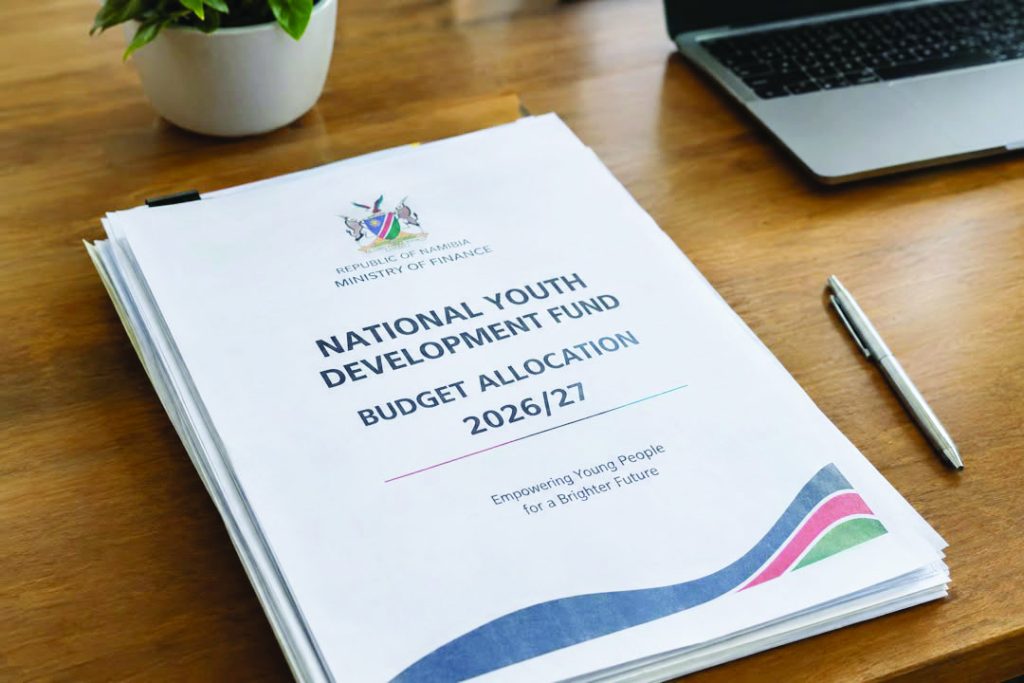
Namibia’s N$50 million allocation to the National Youth Development Fund for the 2026/27 financial year is facing a test of whether government funding can keep pace with demand from young people seeking to establish businesses and create employment.
The allocation is N$208 million lower than the N$258 million appropriated to the fund in 2025/26, representing a decline of about 80.6% in the annual budget allocation.
By the end of August, the fund had received 13,809 applications, with N$135 million in financing approved and N$90.8 million disbursed through the Development Bank of Namibia, Agribank and the Environmental Investment Fund, according to figures reported by The Namibian in September.
The figures highlight the demand for financing among young Namibians, but also the challenge of converting applications into funded businesses.
The National Youth Development Fund offers start-up financing ranging from N$60,000 to N$200,000, while larger business initiatives can qualify for substantially higher amounts.
Its objective is to help young people overcome barriers to finance, establish businesses and create employment.
The question is therefore not only how much money government has committed, but how many viable businesses that money can support and whether the financing will reach young people who need it.
In its October mid-year budget review, government reported that the National Youth Development Fund had grown to an overall investment of N$317 million.
The amount includes the previous financial year’s appropriation, the current year’s allocation and contributions from other institutions.
The review also reported that 373 youth-owned projects had been approved across all 14 regions by 25 September 2026, with N$110.2 million disbursed and approximately 7,110 employment opportunities expected to result.
However, the projected jobs should not be confused with employment already created, and the reported disbursement figures do not establish how many additional projects the N$50 million allocation will finance.
According to Students Union of Namibia (SUN) Board Chairperson Bernard Kavau, the adequacy of the N$50 million allocation can only be determined once the funds have been fully disbursed and their socioeconomic impact assessed.
Kavau said that while the allocation was a necessary starting point for youth development, information gaps remained a major obstacle, particularly among young people in rural areas who were unaware of the fund’s existence.
He called for intensified awareness campaigns and grassroots outreach to ensure that more young people learn about and access the available financing.
Kavau also questioned whether the education system adequately prepares learners to become entrepreneurs, pointing to the low rate of successful applications as a reason to reassess entrepreneurship education from Grade 0 through to Advanced Subsidiary level.
“Are we equipping learners with the entrepreneurial agility to innovate and create employment or are we merely perpetuating a static accumulation of knowledge?” Kavau asked.
He said a definitive assessment of the funding would depend on whether the money translates into measurable socioeconomic benefits, including sustainable businesses and employment opportunities for young people.
According to the University of Namibia (UNAM) student Representative Council (SRC) president Enrico Goseb, the N$50 million youth fund allocation is welcome, but its adequacy must be measured against the number of young people seeking financial support.
Goseb said access to start-up capital remains a major obstacle for students and graduates, particularly those without collateral or personal financial resources.
He called for funding to be complemented by business development support, financial literacy training, mentorship, and accessible application processes.
“Investing in young people is an investment in Namibia’s economic future,” Goseb said, urging government to assess the fund’s impact and increase investment where necessary.
Morres Samuel, the SRC president at Triumphant College, believes the N$50 million allocation is insufficient to address Namibia’s high youth unemployment rate, arguing that limited access to information could prevent some young people from benefiting from the fund.
Samuel said the funding risked reaching only young people who were already aware of the available opportunities, leaving others who could potentially establish businesses without the support they need.
He also argued that a portion of the allocation should be directed towards different sectors and business ideas capable of creating opportunities for other young people.
According to him, youth empowerment should go beyond financing individual applicants to supporting businesses that can employ and empower other young people, creating a wider impact on unemployment.
His concerns raise questions about whether the fund is reaching the young people who need it most, as well as whether its financing model sufficiently encourages businesses with the potential to create jobs beyond their owners.
Samuel’s comments also point to the need to examine how information about funding opportunities reaches young people, particularly those who may have viable business ideas but are unaware of the support available.
Ottilie Andreas, the International University of Management (IUM) SRC president has welcomed the N$50 million allocation to the National Youth Development Fund for 2026/27 but however questioned whether it is enough to address youth unemployment.
She said many young people have viable business ideas but lack the capital, mentorship and market access needed to establish sustainable enterprises.
She called for transparent funding processes, entrepreneurship programs at universities, and stronger support for young businesses through training and procurement opportunities.
Andreas also said the allocation should be reviewed and increased if demand exceeds available resources, adding that the fund’s success should be measured by sustainable businesses established and jobs created.
The Namibian University of Science and Technology (NUST) SRC president Jerome !Nanuseb did not respond to interview questions send by Confidente at time of publication.